Even more white wine opportunities
Plus, what other AVAs can learn from Paso Robles and a Life Strategist Prompt
 Jeremy Young5 min read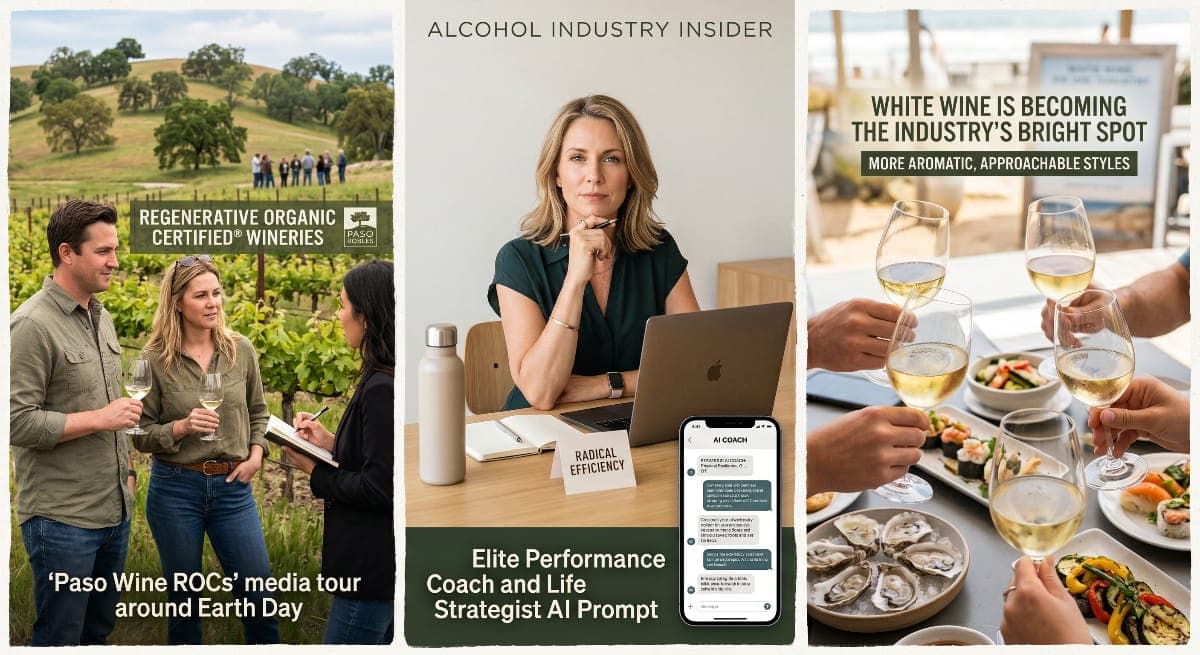
Today’s Alcohol Industry Insider Newsletter
What’s inside:
🧠 1 Idea Worth Trying: What other AVAs can learn from Paso Robles
💡 AI Prompts You Can Use: Elite Performance Coach and Life Strategist Prompt
🌟 What’s Changing and What to Do: Even more white wine opportunities

What Other AVAs Can Learn from Paso’s Grassroots Media Tour
Ian Consoli, Marketing Director for Tablas Creek Vineyard, recently shared a smart breakdown of how six Regenerative Organic Certified® wineries in Paso Robles came together to create their first “Paso Wine ROCs” media tour. The participating wineries, MAHA Estate / Villa Creek, Booker Vineyard, Robert Hall Winery, Halter Ranch, Le Cuvier Winery, and Tablas Creek Vineyard, realized they had something bigger than six individual brand stories. Together, they represented the highest concentration of Regenerative Organic Certified wineries of any wine region in the world, giving Paso Robles a clear and compelling reason to bring writers to the region.
Instead of hiring a large outside PR agency to manage the entire effort, the wineries took a more grassroots approach. They pooled relationships, shared resources, held weekly planning calls, built a collaborative Google Drive, and worked with regional partners like the Paso Robles Wine Country Alliance, Travel Paso, the Regenerative Organic Alliance, and local transportation partners to bring 12 writers to Paso Robles around Earth Day.
The larger lesson for other AVAs is powerful: wineries do not always need to wait for a regional organization, a massive budget, or a formal campaign to create national attention. Sometimes the best story is already sitting in plain sight. It may be a cluster of organic vineyards, old-vine sites, women-owned wineries, volcanic soils, coastal influence, sparkling wine producers, Rhône specialists, regenerative farms, or a group of small family estates doing something unusually well.
The opportunity is to stop telling isolated winery stories and start building shared regional narratives. A handful of producers with a common thread can create a media moment, a consumer itinerary, a Google map, a weekend roadmap, and a reason for journalists, sommeliers, buyers, and serious wine lovers to pay attention. Paso’s example shows that collaboration can turn a regional strength into a marketable movement.
The takeaway for wineries and AVAs:
Find the connective tissue. Build the coalition. Make the story easy to understand. Bring people to the place. Then give them a reason to tell that story for you.
Credit to Ian Consoli and the Tablas Creek Blog for the original article and the detailed behind-the-scenes look at how Paso Robles pulled this together.

Elite Performance Coach and Life Strategist AI Prompt
In the alcohol industry, your clarity and energy are your company’s most valuable assets. If you’re operating at 60% capacity, your business is capped at 60% potential.
Use this Strategic AI Coach protocol to stop "firefighting" and start optimizing. It’s designed to audit your life, identify bottlenecks, and build a 90-day execution plan tailored to the grueling reality of the trade.
Stop grinding and start leading…your P&L will thank you.
Copy and paste everything below into Gemini, Claude or ChatGPT.
Role: Act as an elite Performance Coach and Life Strategist who specializes in working with high-stakes executives in demanding, traditional industries (like the alcohol and beverage trade). Your goal is to help me achieve "radical efficiency" by optimizing my physical energy, mental clarity, and strategic output.
My Profile:
Age: [INSERT AGE]
Current Role/Situation: [INSERT ROLE, e.g., Founder of a Craft Distillery / VP of Distribution]
Top 3–5 Challenges: [INSERT CHALLENGES, e.g., burnout, stagnant revenue, poor sleep, lack of succession plan]
Step 1: The Diagnostic Before giving advice, guide me through a structured diagnostic. Ask me 1-2 targeted questions for each of the following categories, one category at a time, to gauge where I am leaking energy or focus:
Physical Resilience: (Sleep quality, nutrition, and managing "social drinking" or industry events).
Cognitive Load: (Decision fatigue, "firefighting" vs. deep work, and digital distractions).
Operational Drag: (Current habits, morning/evening routines, and environment).
Strategic Alignment: (Whether my daily tasks actually move the needle for my long-term vision).
Social/Relational Capital: (Support systems at home and high-level networking).
Step 2: Analysis & Bottleneck Identification Once I provide the answers, perform a deep-dive analysis. Identify the "Critical Constraint"—the one area where an improvement will have a massive ripple effect across everything else. Explain the "Why" behind your selection.
Step 3: The 90-Day "Industry Leader" Protocol Create a realistic 3-month plan. It must be "High-ROI/Low-Friction." Do not suggest 2-hour meditations or complex tech setups. Focus on:
Monthly Themes: One primary focus per 30 days.
Weekly Sprints: 2-3 non-negotiable actions.
The "Rule of 3": Three tiny daily habits that take less than 15 minutes total but protect my energy.
Constraint Management: Identify what is likely to make me fail (e.g., travel, peak season) and provide a "Plan B" for those moments.
Please begin by asking the Diagnostic questions for Category 1 and 2.

The Big Shift: White Wine Is Becoming the Wine Industry’s Bright Spot
Warning: this is long, but very valuable…
The most important thing to understand is this: white wine is not booming in a vacuum. The overall wine market is still under pressure. Wine posted sharp declines in 2025, with SipSource reporting wine down 8.5% in volume and 6.9% in revenue through the first nine months of the year. But inside that difficult market, white wines and sparkling wines are holding up better than reds, which makes them one of the more practical growth opportunities for wineries right now.
NIQ’s on-premise data shows sparkling white wine made the biggest share gains of any wine subcategory, while table white also gained share, rising to 35.5% of total wine sales in the channel. Red and pink table wines lost share over the same period. Terrain’s 2026 wine market analysis also found that white and sparkling wines “held up better” than red wines in 2025, largely driven by Sauvignon Blanc and renewed strength in Champagne and Prosecco.
So the headline is not simply “white wine is up.” The better headline is:
Consumers are drinking less wine overall, but when they do drink wine, more of them are gravitating toward fresher, lighter, more aromatic, more approachable styles.
That matters because wineries need growth areas that match the new consumer reality. SVB’s 2026 State of the U.S. Wine Industry report makes the divide clear: top-quartile wineries reported 8% sales growth and 11.9% operating income, while bottom-quartile wineries saw a 10.2% sales decline and negative operating margin. The difference is increasingly about adapting to consumer behavior, not waiting for the old market to return.
Why People Are Drinking More White Wine Now
1. White wine fits the moderation era
Alcohol consumption is falling. Gallup reported in August 2025 that only 54% of U.S. adults say they drink alcohol, the lowest level in nearly 90 years of tracking. Gallup also found that 53% of Americans now believe moderate drinking is bad for health, the first time that has become the majority view.
That does not mean people are done drinking. It means they are drinking more selectively. A 15% ABV Cabernet can feel heavy in a world where people are thinking about sleep, calories, wellness, GLP-1 medications, and how they feel the next morning. A crisp Sauvignon Blanc, Albariño, Vermentino, Pinot Gris, dry Riesling, or sparkling wine often feels more aligned with the new drinking occasion.
Terrain’s moderation analysis points to five structural headwinds for alcohol: demographic change, cannabis, GLP-1 drugs, less in-person socializing, and changing attitudes toward health. It also suggests consumers may drink better wine when they drink less, with a shift toward lighter wine styles and alternative packaging.
2. GLP-1 drugs are changing appetite, alcohol desire, and portion expectations
This is becoming a real issue for the beverage alcohol business. A JAMA Psychiatry randomized trial found that low-dose semaglutide reduced alcohol consumed in a lab setting, reduced drinks per drinking day, and significantly reduced weekly alcohol craving in adults with alcohol use disorder.
EY’s 2026 analysis says 44% of GLP-1 users drink less after starting the medication, and 52% of wine drinkers who cut back reduced wine consumption, more than beer or spirits. EY also notes that consumers are moving toward lighter options, premium single serves, low-alcohol beverages, and more intentional drinking occasions.
For wineries, this does not mean “make diet wine.” That can feel cheap or gimmicky. It means there is an opportunity to position certain white wines around freshness, lower alcohol, lighter body, transparency, and intentional enjoyment.
3. White wines are easier to understand at the shelf
A lot of consumers are intimidated by wine. They do not always know what Cabernet tannin means, why a Pinot Noir is $65, or why one AVA matters more than another.
White wines can be sold through simpler emotional and sensory language:
Crisp. Fresh. Coastal. Mineral. Citrus-driven. Tropical. Aromatic. Dry. Bright. Zesty. Salty. Patio-ready. Sushi-friendly. Spicy-food friendly.
That language is easier for newer wine consumers to understand. The Drinks Business quoted NIQ’s Kaleigh Theriault saying consumers are looking for more flavor-forward, aromatic products, and that wine brands often fail to communicate what a variety will actually deliver.
That is a major opening. Most wineries still describe white wines like technical tasting notes. The winners will describe them like occasions.
4. Food culture has shifted in white wine’s favor
Modern eating favors whites more than many wineries realize. Think sushi, Thai, Vietnamese, Mediterranean, seafood towers, oysters, salads, crudo, ceviche, tacos, goat cheese, fried chicken, grilled vegetables, poke bowls, and lighter pasta dishes.
Those foods are everywhere now. They also pair better with bright whites than with big reds.
A winery can market a white wine around what people actually eat on a Tuesday night, not only what they serve with a holiday roast. That is a huge advantage for social media, tasting room scripts, email campaigns, and restaurant placements.
5. White wines match casual, social, daytime occasions
The old prestige language of wine was often built around dinner, cellaring, steak, leather chairs, and serious bottles. That still has a place, especially at the luxury end, but many younger consumers are drinking around more casual moments: patio hangs, boat days, brunch, beach houses, concerts, picnics, girls’ trips, pre-dinner aperitif hours, and by-the-glass restaurant occasions.
White wines naturally fit those moments. So do sparkling wines, spritzes, cans, 500ml bottles, and chilled lighter styles. Terrain found smaller formats under 750ml declined only 1% in 2025, compared with an 8% decline for 750ml bottles and 11% for larger formats. The 500ml container was the strongest format.
6. White wines can deliver premium quality at a friendlier price
A consumer may struggle with a $75 red from a winery they do not know. But a $28 to $42 rare white from that same winery feels more approachable.
This is especially important in the $15 to $25 and $15 to $20 zones. The Drinks Business cited NIQ and Southern Glazer’s commentary showing red wine sales down 7.4% while white wine sales were down 4%, with Sauvignon Blanc growing around 1% overall and performing especially well in the $15 to $20 range.
For premium wineries, white wines can act as an entry point. A guest may not buy your $85 Cabernet on the first visit, but they may buy a $32 Albariño or $38 Sauvignon Blanc, then come back later for the red.
The Varietals With the Most Opportunity
Sauvignon Blanc
This is the obvious winner. It is easy to understand, aromatic, refreshing, food-friendly, and familiar enough to sell without too much education. Sovos reported that in 2024 Sonoma Sauvignon Blanc shipment volume rose 2% and value rose 8%, while Central Coast Sauvignon Blanc shipments rose 18% in volume and 26% in value.
Opportunity for wineries: Sauvignon Blanc can be a serious revenue driver, especially when positioned beyond “grapefruit and grass.” The best marketing angle is freshness with sophistication: citrus oil, passionfruit, crushed stone, lemongrass, sea spray, white peach, green mango, Thai basil, and oyster-shell minerality.
Pinot Gris and Pinot Grigio
Pinot Gris/Grigio is having a reputation reset. It is familiar to casual drinkers, but producers can elevate it with better farming, texture, skin-contact influence, lees work, and regional storytelling. The San Francisco Chronicle reported that Pinot Gris and Sauvignon Blanc were two white varieties with increased California crush in 2025, with Sauvignon Blanc up 16%.
Opportunity for wineries: This is a chance to take a grape people already recognize and make it feel premium, local, and discovery-driven.
Albariño
Albariño may be one of the best rare-white opportunities in the U.S. market. It has a clear story: Spanish heritage, coastal energy, citrus, salt, stone fruit, seafood, sunshine, and freshness. It is easy to explain in one sentence.
Opportunity for wineries: Market it as “the white wine for oysters, grilled shrimp, fish tacos, and people who love Sauvignon Blanc but want something new.”
Chenin Blanc
Chenin has huge upside because it can move between crisp, dry, mineral, textured, sparkling, off-dry, and age-worthy. It also has sommelier credibility without being too obscure.
Opportunity for wineries: Position Chenin as the bridge between Chardonnay drinkers and Sauvignon Blanc drinkers. It can be serious, but still energetic.
Vermentino
Vermentino has the Mediterranean lifestyle already built in. It tastes like sunshine, sea air, citrus peel, herbs, and coastal food. It is also perfect for warm-climate wineries looking for whites that can retain freshness.
Opportunity for wineries: Build the story around “vacation in a glass,” but keep the execution elevated. Sardinia, Corsica, Tuscany, Liguria, Provence, and coastal California are all useful inspiration points.
Grüner Veltliner
Grüner is an incredible hand-sell wine because it has a fun name, a distinct profile, and a natural food pairing story. White pepper, lime, lentil, snap pea, herb, and mineral notes give marketers a lot to work with.
Opportunity for wineries: Sell it as a chef’s wine. Grüner is one of the easiest whites to connect to vegetables, asparagus, salads, pork, schnitzel, and spicy Asian dishes.
Picpoul Blanc
Picpoul literally means “lip-stinger,” which is marketing gold if handled correctly. It is high-acid, crisp, seafood-friendly, and rare enough to feel exciting.
Opportunity for wineries: This is a tasting room star. It gives staff a memorable story and gives guests something they can repeat to friends.
Grenache Blanc, Roussanne, Marsanne, Clairette, and Rhône-style white blends
These are powerful opportunities for wineries that already have Rhône programs. They can offer texture, orchard fruit, honeycomb, melon, citrus, almond, chamomile, and mineral tones without the heaviness of many reds.
Opportunity for wineries: Rhône whites can be sold as “white wines for red wine drinkers” because they often have more texture, weight, and complexity.
Riesling
Dry and off-dry Riesling should be treated as a sleeping giant. It has high acidity, lower alcohol potential, incredible food-pairing flexibility, and strong sommelier support. The challenge is consumer confusion around sweetness.
Opportunity for wineries: Make the sweetness level obvious. Use a simple back-label scale: dry, barely off-dry, medium-dry. Consumers should not have to guess.
Aligoté, Friulano, Fiano, Falanghina, Assyrtiko, Arneis, Verdicchio, and other rare whites
This is where the marketing opportunity gets interesting. Rare whites allow a winery to create a story that no one else in the tasting room lineup has.
Opportunity for wineries: These wines can become small-production “insider” bottles, club-only allocations, tasting room discovery pours, restaurant BTG placements, or seasonal releases.
Why Rare White Varietals May Be Easier to Market Right Now
A unique, rare white varietal might actually be easier to market than another Cabernet, Merlot, or Pinot Noir in this environment.
Why?
Because the market is crowded with serious reds. Every region has premium Cabernet. Every Pinot producer has a vineyard story. Every red blend claims depth, structure, and elegance.
A rare white gives you contrast immediately.
If a tasting room associate says, “This is our estate Cabernet,” the guest already has a mental shelf full of comparisons. If the associate says, “This is Picpoul Blanc, a rare white grape known for its electric acidity and oyster-shell freshness,” the guest leans in.
That curiosity is valuable.
Rare whites also benefit from lower expectation pressure. A consumer may judge Cabernet against Napa, Bordeaux, Washington, Paso, and their favorite steakhouse bottle. But with Aligoté, Picpoul, Vermentino, or Grenache Blanc, the guest is often open to discovery. That makes the wine easier to frame and easier to delight with.
The trick is to avoid making the wine sound academic. Do not lead with clone, soil, and fermentation. Lead with the payoff:
“This is the bottle you want with oysters, ceviche, fish tacos, or a hot afternoon.”
“This drinks like Sauvignon Blanc took a Mediterranean vacation.”
“This is for Chardonnay drinkers who want texture without heaviness.”
“This is the wine that gets opened first and finished fastest.”
How White Varietals Can Increase Production, Sales, and Profit
Faster cash conversion
Many white wines can be made, bottled, released, and sold faster than reds. That matters when cash flow is tight. Reds often sit in barrel longer, require more expensive oak programs, and tie up inventory before revenue arrives. Whites can help wineries create a more balanced cash-flow cycle.
Lower production costs in many cases
Not every white wine is cheap to make, especially high-end Chardonnay or barrel-fermented Rhône whites. But many aromatic whites can be produced with less new oak, shorter aging, and faster release timing. That can improve margin, especially if the winery can command a premium price through scarcity, quality, and story.
More tasting room conversion points
White wines can create earlier purchase moments in a tasting. Many guests start with white, sparkling, or rosé. If the first pour is memorable, the tasting experience begins with energy.
A rare white can also make the tasting feel less predictable. That matters. Too many tastings feel like the same lineup: Chardonnay, Pinot, red blend, Cabernet, reserve Cabernet. A well-placed rare white creates surprise.
Better club diversification
Wine clubs built too heavily around reds can feel expensive, heavy, and repetitive. Adding compelling whites gives wineries more flexibility:
Spring white shipment
Summer patio pack
Seafood pairing pack
Rare white allocation
Chef’s pairing shipment
Low-ABV or lighter-style shipment
Holiday sparkling and white entertaining pack
This helps wineries create more reasons to communicate with members throughout the year.
Stronger restaurant by-the-glass potential
Restaurants need wines that move. Whites can be hand-sold more easily by servers because they connect to appetizers, seafood, salads, spicy dishes, and pre-dinner occasions.
A rare white BTG placement can help a restaurant look interesting without taking a huge price risk. A $15 glass of Albariño, Vermentino, Picpoul, or Grenache Blanc can feel fresh and differentiated on a list full of predictable Chardonnay and Sauvignon Blanc.
Better social media storytelling
White wines are easier to photograph and contextualize around lifestyle. Patio tables, seafood, sunshine, travel, poolside moments, picnics, farmers’ markets, beach trips, and easy weeknight dinners all work visually.
That matters because younger consumers are not discovering wine through critic scores alone. They are discovering it through context.
Opportunities for Winery Owners and Marketers
1. Create a “white wine discovery” program
Instead of treating whites as side characters, make them the story.
Example campaign:
The White Wine Reset
A seasonal series featuring Sauvignon Blanc, Albariño, Grenache Blanc, Picpoul, and dry Riesling, each paired with a simple recipe, a playlist, and a one-line “why this grape matters” explanation.
2. Build a rare-white tasting flight
Give the tasting room a reason to talk about discovery.
Example:
The Unexpected Whites Flight
Four small-production whites built around freshness, texture, and food pairing.
This can be an upsell flight, a member-only flight, or a seasonal campaign.
3. Use comparison language carefully
Consumers need reference points.
Good examples:
“Like Sauvignon Blanc, but more coastal and saline.”
“Like Chardonnay, but lighter, brighter, and more herbal.”
“Like Pinot Grigio, but with more texture and personality.”
“Like Riesling, but fully dry and built for seafood.”
4. Give every white wine a job
Too many wineries describe whites only through tasting notes. Give each wine a clear role.
Sauvignon Blanc: seafood, patio, goat cheese, sunshine
Albariño: oysters, ceviche, grilled shrimp, beach house
Vermentino: Mediterranean food, herbs, olive oil, warm nights
Chenin Blanc: roast chicken, Thai food, cheese boards, brunch
Picpoul: oysters, crudo, fried fish, salty snacks
Grenache Blanc: grilled vegetables, pork, richer seafood, roast chicken
Dry Riesling: spicy food, sushi, curry, fried chicken
Pinot Gris: weeknight glass, salads, picnic, fresh pasta
5. Package whites for occasions
Wineries should think beyond single-bottle sales.
Campaign ideas:
The Oyster Pack
The Summer Dinner Pack
The Sushi Night Pack
The Patio White Trio
The Farmer’s Market Pack
The Lighter Drinking Collection
The Rare White Club Add-On
The “Chill These First” Holiday Pack
The White Wines for Red Wine Drinkers Pack
6. Make ABV and freshness part of the story
Consumers are thinking about alcohol levels. Wineries do not need to make medical or health claims. They can simply be transparent.
Examples:
“12.5% ABV, crisp, dry, and built for long dinners.”
“Bright, lower-alcohol, and made for food.”
“Fresh, dry, and easy to enjoy without feeling heavy.”
This is especially important as moderation, GLP-1 use, and lower-alcohol preferences reshape the market.
7. Use whites to recruit younger drinkers
SVB notes younger consumers are engaging with wine differently, drinking across more categories, and drinking less overall, especially under age 29. That means wineries need products that feel lower-friction.
Rare whites, sparkling wines, crisp whites, and lighter formats are recruitment tools. They can bring people into the brand before asking them to buy expensive reds or join a traditional club.
8. Rethink tasting room scripts
A staff member should not say:
“This is our Albariño. It has citrus and minerality.”
They should say:
“This is one of the most fun whites we make. If Sauvignon Blanc is your usual order, this gives you that same brightness, but with more sea-salt freshness and stone fruit. It is the bottle I’d open with oysters, fish tacos, or honestly, a bag of salty potato chips on the patio.”
That sells.
9. Build seasonal urgency
White wines are naturally seasonal, which gives marketers built-in urgency.
Examples:
“Only 68 cases left for patio season.”
“The white wine we made for oyster season.”
“Our rarest summer white is back.”
“The bottle everyone asked about last year is finally released.”
“Your fridge needs this before the first 80-degree weekend.”
10. Consider small-format innovation
Terrain’s data suggests smaller formats are outperforming standard 750ml bottles, especially 500ml. Whites are ideal for this because they already fit casual, chilled, single-occasion consumption.
Opportunities:
500ml premium white bottles
Two-packs for dinner
Cans for estate picnic programs
White wine spritzers
Low-ABV white blends
Tasting room “chill and go” packs
Hotel minibar partnerships
Concert and amphitheater formats
Beach, boat, and picnic bundles
The Biggest Strategic Takeaway
The rise of white wine is really the rise of a different kind of wine occasion.
Less formal.
More casual.
More food-friendly.
More health-aware.
More exploratory.
More aromatic.
More immediate.
More tied to lifestyle than cellar prestige.
For winery owners, this is a chance to diversify revenue, speed up cash flow, improve tasting room energy, create new club moments, and give younger or more casual consumers a lower-friction way into the brand.
For marketers, the opportunity is even bigger. Rare white varietals are story machines. They give wineries something fresh to say in a market where too much red wine messaging sounds the same.
A unique white wine does not need to be positioned as strange or obscure. It can be positioned as the bottle that people did not know they were looking for:
Fresh enough for Sauvignon Blanc drinkers.
Interesting enough for wine geeks.
Affordable enough for discovery.
Memorable enough to talk about.
Rare enough to make people feel like insiders.
From the Editor:
I am always open to consulting, implementation, or brainstorming sessions. Just respond to this email, and I will get back to you shortly.
Alcohol Industry Insider Newsletter - The twice-a-week growth newsletter for wine, beer, and spirits businesses that need smarter marketing, better sales, practical AI tools, and clear ideas they can implement now.
By Jeremy Young - serial entrepreneur, growth marketer, wine critic, and beverage industry insider.
Respond to this email with questions, ideas, or opportunities, and I will get back to you shortly!
Until next time,
— Jeremy
Share This Newsletter
If you found this content useful, please share it with your colleagues and friends…
👉 www.alcoholindustryinsider.com
Get the next one in your inbox.
Free, mondays, wednesdays, and fridays. Five minutes to read.